Hiking in Ireland: What the Trails Are Actually Like
Written by people who walk these routes — including the parts the brochures leave out.
Hiking in Ireland means something slightly different from hiking in Colorado or the Alps. There are mountains, but few of them are high — Carrauntoohil, the highest point on the island, is 1,038 m. What Ireland has instead is a network of waymarked long-distance trails that run for days at a time along coastline, over bog and through farmland, linking one village to the next.
That distinction matters more than it sounds, and it catches a lot of visitors out.
Hiking in Ireland: the short version
- Best months — May to September. Longest daylight, driest ground, everything open.
- Highest point — Carrauntoohil, 1,038 m (3,407 ft), in the MacGillycuddy's Reeks, County Kerry.
- The three best-known long trails — the Wicklow Way (128 km), the Dingle Way (163 km) and the Kerry Way (232 km), the longest of Ireland's National Waymarked Trails.
- No right to roam. Unlike Scotland, Ireland has no general right of access. Almost all land is privately owned, and the waymarked trails cross it by agreement with landowners rather than by legal right.
- You will get wet. Not a maybe. Plan the clothing around it and it stops being a problem.
That last point about access is the one that reshapes a trip. In Scotland you can plot a line across a map and walk it. In Ireland you follow the National Waymarked Trails — and that is why almost all serious hiking here is linear, point to point, and takes several days rather than an afternoon.
It is also why the trails are treated with a certain care. The Kerry Way and the Dingle Way both close formally for one day each year, on 28 February, precisely to establish that they are permissive routes rather than rights of way. You are walking on goodwill, and it is worth walking like it.
Ireland's Terrain, Honestly Described
Most guides to hiking in Ireland show you a photograph of a cliff and leave it there. Here is what the ground is actually like underfoot, because it is the thing that surprises people most.
Bog
Large stretches of Irish upland are blanket bog. In dry weather it is springy and pleasant. After a wet week it is ankle-deep and it will pull a boot off your foot. Boardwalk has been laid on the busiest sections — the Spinc at Glendalough, parts of the Wicklow Way — but a lot of it is not boarded.
Forest track
Wide, firm, fast, and on some trails there is more of it than the photographs suggest. The Wicklow Way in particular spends real time in commercial forestry.
Quiet road — and how much of it
Every Irish long-distance trail uses some tarmac to link sections where there is no legal right of way. Sport Ireland publishes the figures and they are worth knowing before you choose: the Kerry Way is 36% on local roads (77 km of 232 km) and the Dingle Way is 47% (76 km of 163 km). Almost the same distance on tarmac — but because the Dingle Way is shorter, a far larger share of your week is spent on it. Anyone who tells you a route is entirely off-road has not walked it.
Coastal path and beach
The best of it. The Dingle Way crosses long open strands; the Sheep’s Head and Beara peninsulas run headland to headland with the Atlantic on one side the whole way.
Mountain
Steeper than the modest heights imply. Our Cooley and Mourne route climbs 3,301 m across 84.3 km — a lot of ascent packed into a short distance, because Irish hills tend to go straight up rather than switchback.
Rain, in numbers
Met Éireann counts a “wet day” as 1 mm of rain or more. In 2025 that ranged from 134 days at Dublin Airport to 216 at Newport, Co. Mayo — between roughly a third and three-fifths of the year, depending which coast you are on. It is not a reason to avoid the country; it is the reason it is that colour.
Grade, in plain terms
| Grade | What it means | Typical day |
|---|---|---|
| Leicht | Mostly level, firm ground | 9–15 km |
| Mittelschwer | Sustained climbs, some rough ground | 14–20 km |
| Anspruchsvoll | Long days, real ascent, exposed sections | 18–26 km |
| Challenging+ | Big days, serious ascent | 22–30 km |
The Barrow Way is the gentlest long trail we know — 117.3 km with only 844 m of total ascent, because it follows a towpath. Our full-trail Wicklow Way covers 138.2 km with 4,612 m of climb. Same country, same number of days, entirely different week.
Day Hikes or a Long Trail?
This is the real fork in the road, and it decides everything else about the trip.
Day hikes
Ireland's famous day walks are genuinely superb — the Spinc loop above Glendalough, Diamond Hill in Connemara, Croagh Patrick, Slieve League, Carrauntoohil for the experienced. AllTrails and the walking blogs cover these well, and we would point you to them.
The catch: almost every one requires a car. Trailheads are rural, public transport to them is thin to non-existent, and you will spend a large share of the holiday driving between them on narrow roads. Great if you were renting a car anyway. Frustrating if you were not.
Long-distance trails
The waymarked ways were built to be walked in sequence — you start at one end, you finish at the other, and you sleep in a different village every night. No car. No backtracking. The walk is the journey rather than a series of outings from a base.
This is where Ireland is genuinely world-class, and it is also the part the big listicles skim over, because it is harder to photograph than a summit.
A typical day on an Irish long trail is 16–20 km, five to seven hours at an unhurried pace with stops. You leave a village after breakfast, you walk, you arrive somewhere else in the late afternoon, and there is a pub. Repeat for five to ten days.
The practical objection people raise: “Doesn't that mean carrying everything?” No — not the way most people walk these trails now. Bags go ahead by road to the next night's accommodation, and you walk with a daypack. That single arrangement is what makes a multi-day Irish trail accessible to ordinary walkers rather than just backpackers, and it is why you can hike here without a car at all.
Irlands beste Wanderregionen
Entdecken Sie die unterschiedlichen Landschaften und Wanderwege, die das Wandern in Irland prägen. Jede Region bietet ihren eigenen Charakter, Herausforderungen und Belohnungen.
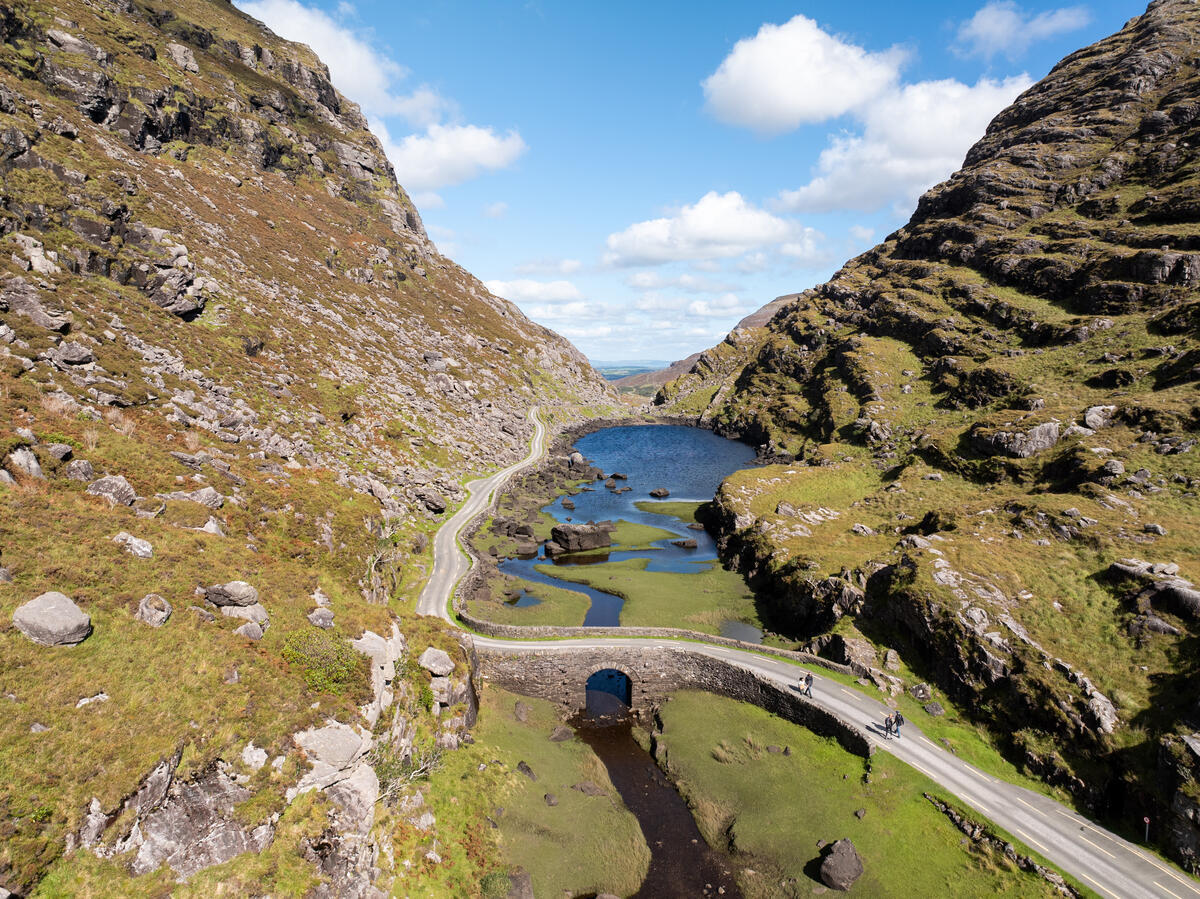
Wild Atlantic Way
Kerry Way, Halbinsel Dingle, Burren, Causeway Coast. Dramatische Klippen, Inselblicke, Kalksteinplateaus, uralte Geschichte. Das rohe, romantische Irland.
Wanderwege erkunden arrow_forward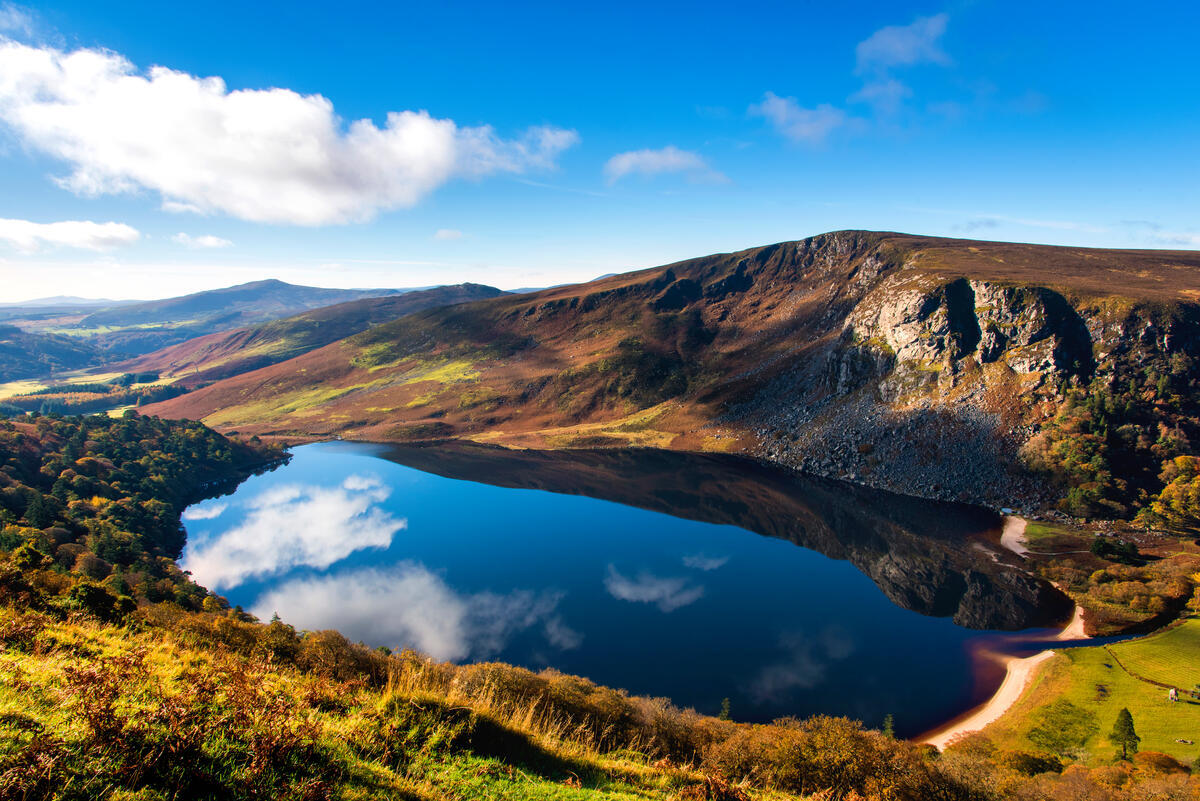
Wicklow Mountains
Nah an Dublins Energie, aber tauchend in Granitberge, Gletschertäler, uralte Klöster. Von Stadtlichtern zu Bergeinsamkeit in wenigen Minuten.
Wanderwege erkunden arrow_forward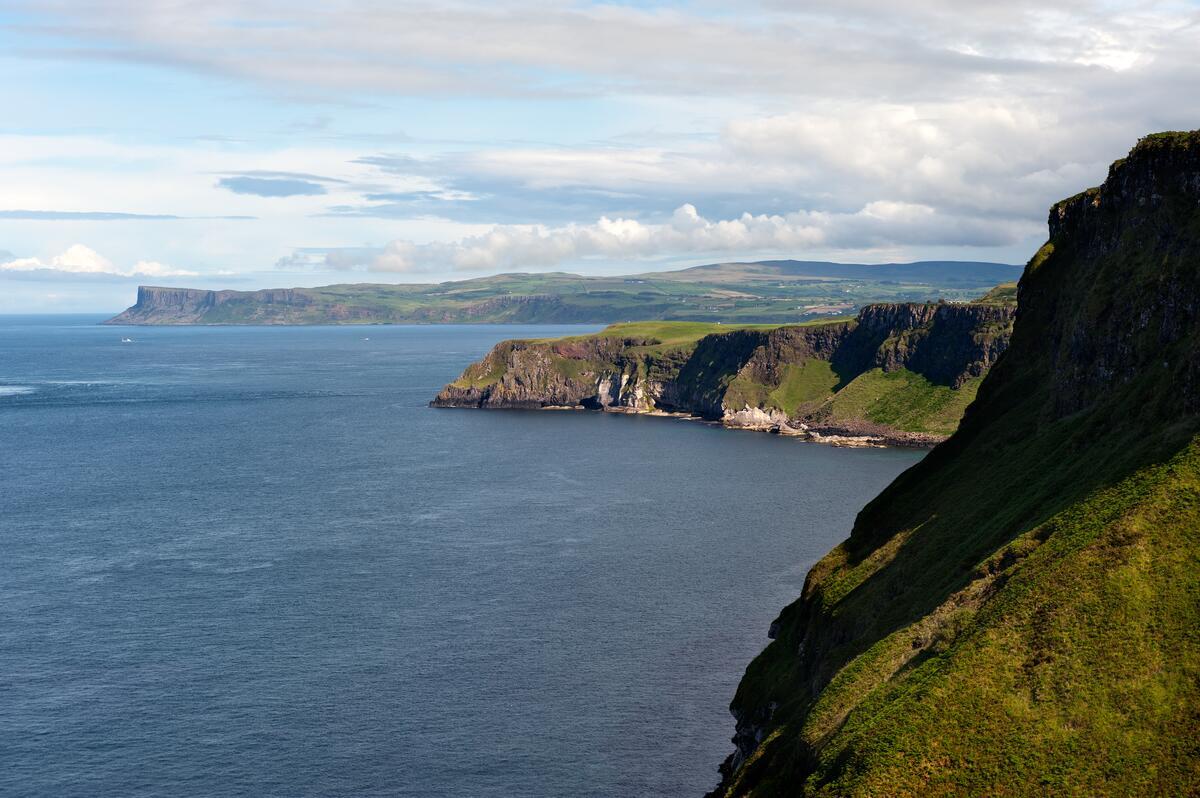
Nordirland
Basaltklippen, vulkanische Landschaften, Bergketten, Gletschertäler. Dramatische Geologie und wild, weniger überfüllte Wanderreisen in einer der malerischsten Gegenden Europas.
Wanderwege erkunden arrow_forward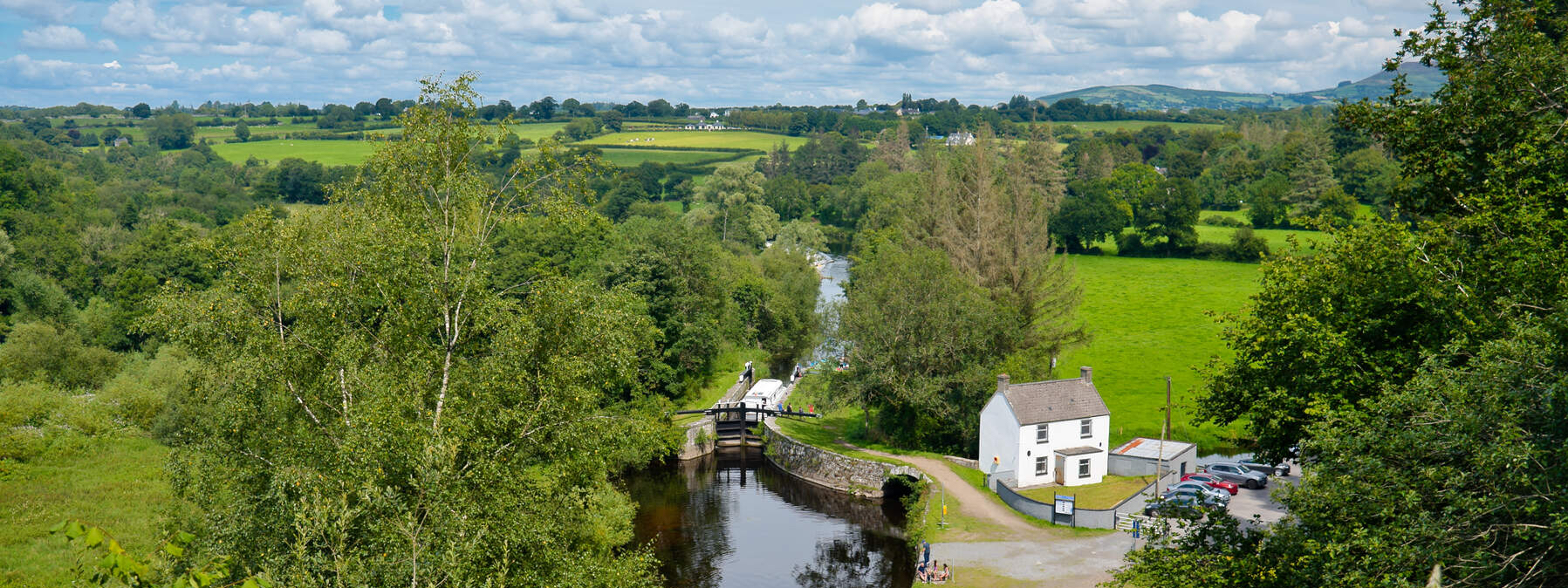
Irlands uralter Osten
Flussuferpromenaden, Kanaltreidelpfade, mittelalterliche Abteien, georgianische Städte, Klosterstätten. Leichteres Gelände, reiche Geschichte, ruhigere Wanderwege durch grünes Herzland.
Wanderwege erkunden arrow_forward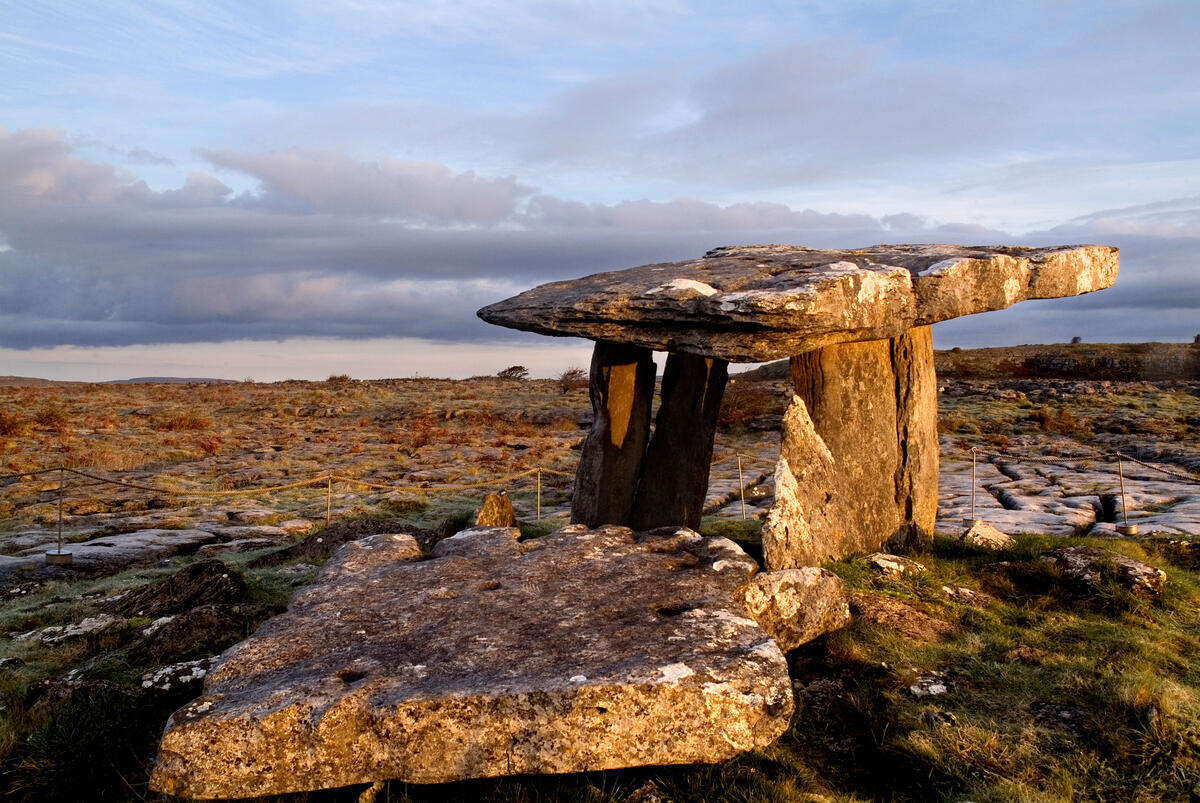
Burren & Cliffs of Moher
Europas seltenstes Kalksteingebilde. Arktisch-alpine Wildblumen, 340 Millionen Jahre alte Felsformationen, dramatische Klippen. Ein geologisches Wunderland zum Wandern.
Wanderwege erkunden arrow_forward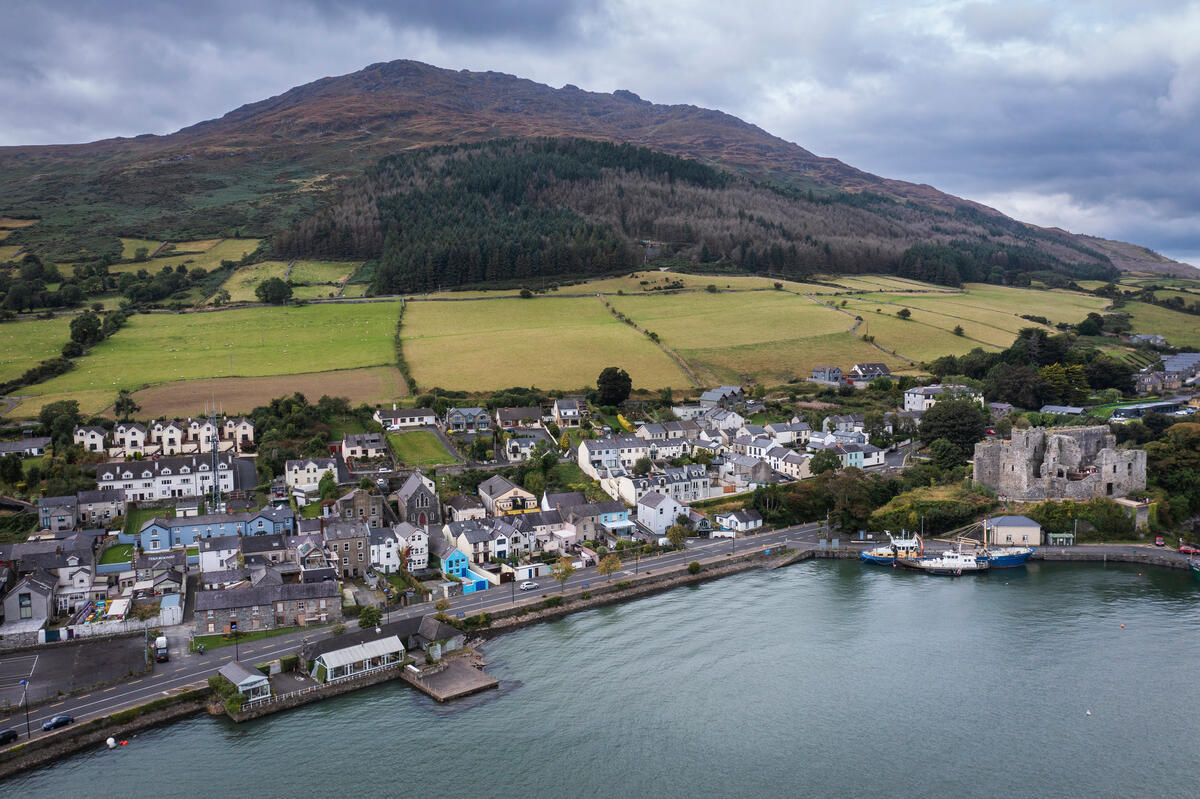
Cooley & Mourne Mountains
Zwei Granitbergketten verbunden durch eine Fährüberfahrt. Dramatische Gipfel, Meeresausblicke, Berglandschaften und ein einzigartiges grenzüberschreitendes Wanderabenteuer.
Wanderwege erkunden arrow_forwardWhich trail suits you
Nine waymarked routes, in versions from five to ten days. Rather than repeat them here, we keep one page up to date with distances, ascent, grade and current prices.
| If you want… | Walk this |
|---|---|
| To fly in and start walking the same day | Wicklow Way |
| Big mountain scenery and remoteness | Kerry Way |
| Beaches and the Atlantic all week | Dingle Way |
| Quiet — genuinely quiet | Beara Way |
| The gentlest possible multi-day walk | Barrow Way |
| Something short and perfect | Sheep’s Head Way |
| Geology and famous landmarks | Causeway Coast |
| Wildflowers and limestone | Burren Way |
For a route-by-route comparison with distances, ascent and prices, see our guide to Ireland's best hiking trails. Our hiking holidays start from €485 per person.
Selbstgeführte Wanderreisen in Irland: Warum es funktioniert
Was Sie bekommen
- check_circle Gepäcktransfer — Ihre Taschen werden zwischen B&Bs transportiert. Sie wandern einfach.
- check_circle Handverlesene B&Bs — Selbstgemachte Frühstücke, warme Gastgeber, zuverlässiger Komfort jede Nacht.
- check_circle GPS-Dateien & Karten — Detaillierte Wandernotizen und digitale Navigation für Sicherheit.
- check_circle 24/7-Unterstützung — Lokale Vor-Ort-Hilfe, falls Sie sie brauchen (und normalerweise brauchen Sie sie nicht).
- check_circle Ihr Tempo — Keine Gruppen, kein Zeitplan. Starten Sie wann Sie möchten, machen Sie Pausen wann Sie möchten.
- check_circle Echte Verbindung — Treffen Sie jeden Abend andere Wanderer, teilen Sie Geschichten, machen Sie Freunde.
Warum Wanderer selbstgeführte Wanderreisen lieben
Self-guided hiking in Ireland is the sweet spot. You get all the logistics handled—no need to carry a heavy pack or navigate complex logistics—but you maintain complete freedom. Walk at your pace. Stop when you want. Chat with locals. Explore side trails. Have a long lunch in a village. Skip a stage if weather turns rough. No guide dictating speed, no group waiting for you.
You also get better value. Professional hiking guides add significant cost. Self-guided means that money goes into better accommodation, more nutritious meals, and more experiences—not into paying for someone to tell you facts you could read on a sign.
"Die Freiheit, auf Ihre eigene Art und Weise zu wandern, unterstützt von Menschen, die wirklich möchten, dass Sie erfolgreich sind. Das ist Wandern in Irland richtig gemacht."
Planen Sie Ihre Wanderreise nach Irland
calendar_today Best Time to Hike
März–Mai (Frühling): Mildes Wetter, Wildblumen beginnend zu blühen, weniger Touristen.
Juni–September (Sommer): Bestes Wetter, längste Tageslichtstunden, wärmste Temperaturen. Auch voller.
Oktober (Herbst): Goldenes Licht, komfortables Wandern, überschaubare Menschenmengen.
November–Februar (Winter): Dramatisches Wetter, leere Wanderwege, kurze Tageslichtstunden. Nicht für jeden, aber lohnend.
backpack What to Pack
Essenzielle: Leichter Rucksack (15–20L), wasserdichte Jacke, robuste Wanderstiefel, warme Schichten.
Irland-spezifisch: Regenausrüstung (unverzichtbar), Sonnenschutz, Insektenschutzmittel, tragbares Ladegerät für GPS.
Profi-Tipp: Packen Sie leicht – Ihre Unterkunft ist nicht weit entfernt. Ein kleiner Rucksack macht das Wandern in Irland angenehmer.
trending_up Fitness Levels & Grading
Leichte Wanderwege: Der Barrow Way. Flach, am Fluss, überschaubare tägliche Distanzen. Ideal für Familien und Anfänger.
Mittelschwere Wanderwege: Wicklow Way, Dingle Way, Burren Way. Hügeliges Gelände, einige Bergabschnitte, machbar für die meisten Fitnessniveaus.
Anspruchsvolle Wanderwege: Kerry Way. Bergpässe, Höhengewinn, längere Tage. Geeignet für erfahrene Wanderer.
flight_takeoff Getting to Ireland
Dublin Airport: Die meisten internationalen Flüge. 2 Stunden zu Wicklow/Barrow-Wanderwegen, 3-4 Stunden zu Kerry/Dingle.
Cork, Shannon, Belfast: Alternative Flughäfen näher an einigen Wanderwegen.
Mietwagen empfohlen: Selbstfahren ermöglicht Flexibilität zwischen Wanderabschnitten.
Warum mit Walking Holiday Ireland wandern
Familienbetrieb seit 2012. Wir kennen diese Wanderwege in- und auswendig und wissen, wie wir Ihren Wanderurlaub unvergesslich machen.
Cliff und Louise haben alle angebotenen Wanderwege selbst erwandert. Wir aktualisieren unsere Wanderrouten jährlich und testen jedes B&B persönlich.
Wanderer aus 40+ Ländern haben uns vertraut, ihr Wandererlebnis in Irland zu liefern. Lesen Sie unsere Bewertungen.
Was uns unterscheidet
- star Handverlesene B&Bs: Keine Kettenhotels. Familiengeführte Gästehäuser, in denen die Gastgeber Ihren Namen kennen.
- star Faire Preise: Best-Preis-Garantie. Wir werden nicht zu viel berechnen, und wir schätzen Preis-Leistungs-Verhältnis genauso wie Sie.
- star Reaktionsschnelle Unterstützung: Lokales Team mit Sitz in Irland. 24/7-Unterstützung von Menschen, denen es wirklich wichtig ist.
- star Flexible Reiserouten: Möchten Sie Tage tauschen, einen Wanderweg verlängern, einen Abschnitt überspringen? Wir machen es möglich.
- star Echtes Wander-Wissen: Wir buchen Sie nicht einfach auf Wanderwege – wir helfen Ihnen, den richtigen für Sie zu wählen.
Möchten Sie direkt von Wanderern hören, die mit uns gewandert sind?
Lernen Sie Cliff & Louise kennen arrow_forwardFrequently asked questions
Which is better for hiking, Scotland or Ireland?
They suit different trips. Scotland has higher mountains, wilder terrain and a legal right to roam that lets you plan your own line across the map. Ireland's strength is its waymarked long-distance trails — gentler underfoot, better connected to villages and pubs, and far easier to walk without a car or a tent. If you want summits and self-sufficiency, Scotland. If you want to walk from village to village for a week and sleep in a bed, Ireland.
Do I need hiking boots in Ireland?
For the long-distance trails, yes — waterproof boots with ankle support. Irish ground is soft, uneven and frequently wet, and trail runners will leave you with soaked feet within an hour of leaving the road. For surfaced day walks and towpaths, sturdy shoes are fine.
What part of Ireland has the best hiking?
County Kerry has the most dramatic combination of mountain and coast — the Kerry Way and the Dingle Way both sit there. Wicklow is the most accessible from Dublin. Donegal and the Antrim coast are the most underrated. For quiet, the Beara and Sheep's Head peninsulas in West Cork.
What is the best time of year to hike in Ireland?
May to September. May and June give the longest daylight and the driest ground — Dublin's latest sunset is 21:57 and the west coast runs a further fifteen minutes behind that. September gives the best light and the fewest people. Most multi-day walking services and rural accommodation close between November and March.
How long does it take to walk the Kerry Way?
The full 232 km loop takes most walkers 9 to 11 days. Section walks of the best stretches take 5 to 8 days — which is what most visitors actually do.
Can you hike in Ireland without a car?
On the waymarked long-distance trails, yes. They are linear by design, they connect villages, and with luggage moved ahead by road you never need to return to a starting point. Most famous day hikes, by contrast, do require a car to reach the trailhead.
Is hiking in Ireland difficult?
Physically it is moderate rather than hard — the mountains are low and the trails are waymarked. The difficulty is endurance and conditions: 16–20 km a day for several days, on soft ground, in weather that changes hourly. If you can walk comfortably for five hours, you can do this.
Bereit, Irland zu Fuß zu erkunden?
Ihr nächstes Wanderabenteuer wartet. Wählen Sie einen Wanderweg, wählen Sie Ihre Daten, und lassen Sie uns die Logistik handhaben. Sie wandern einfach.
Not ready yet? Read about how it works or check our hiking guides.